1. Enable Change Tracking in SQL Server
Change Tracking must be enabled on the database, and then on each table you want to track. Both statements can be run from Browse Data using the source connection. First, the database: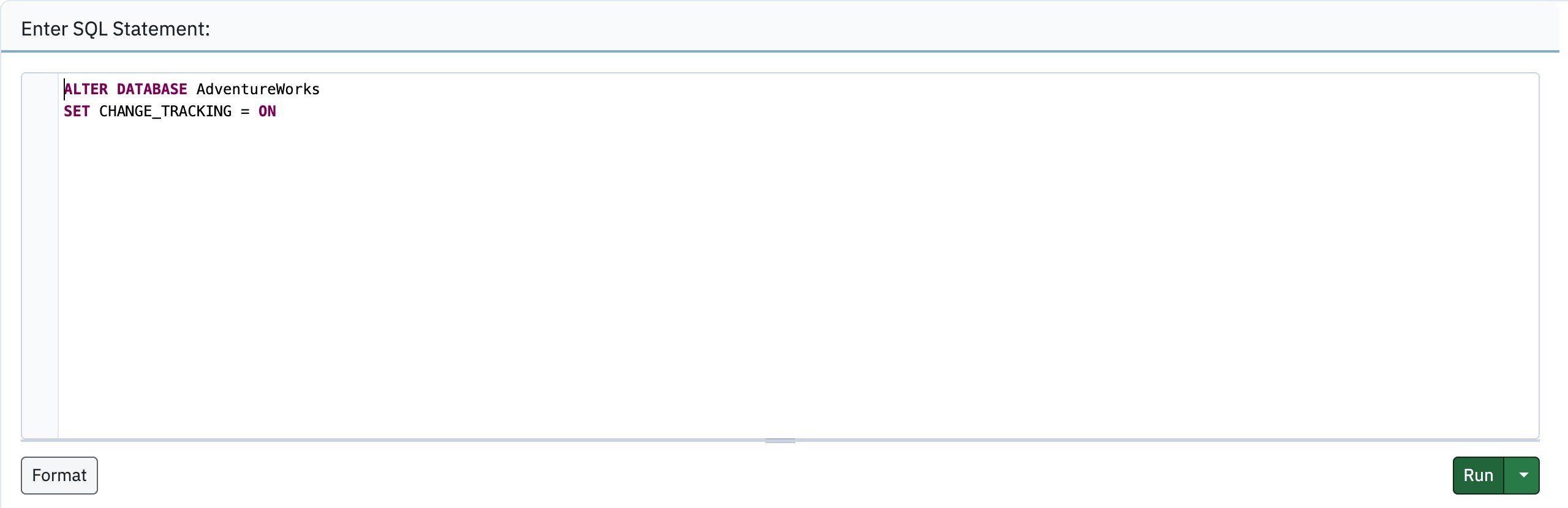
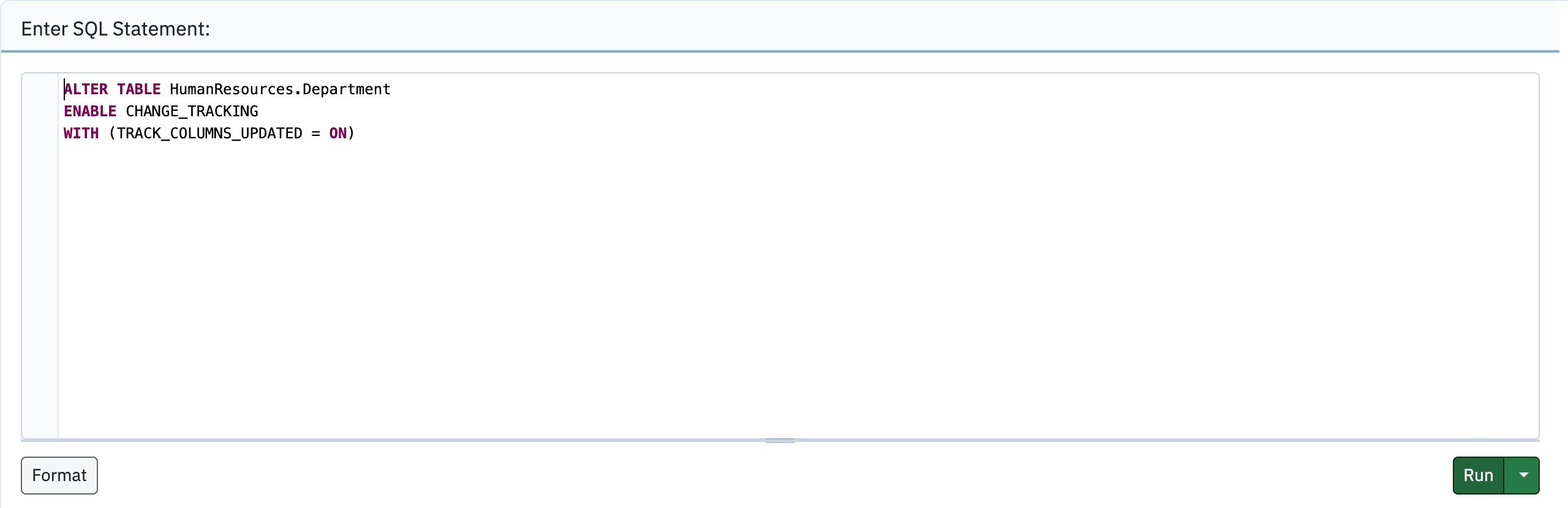
Running either statement when tracking is already on returns an error such as Change tracking is already enabled for table ‘Department’ — this is harmless. The table must have a primary key for Change Tracking to be enabled. The login used by the Kodda connection needs
VIEW CHANGE TRACKING permission on the table.2. Set the Load Type
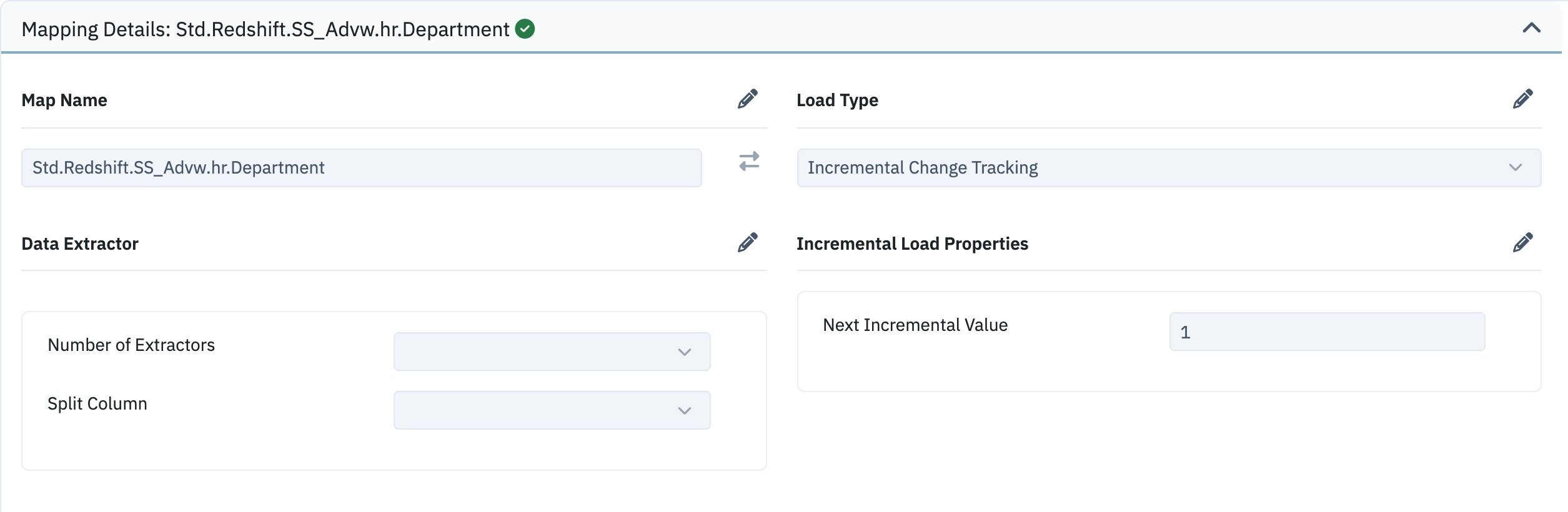
In Edit Mapping, set Load Type to Incremental Change Tracking and save. The mapping below,Std.Redshift.SS_Advw.hr.Department, loads the tracked table into Redshift.
3. What Kodda loads
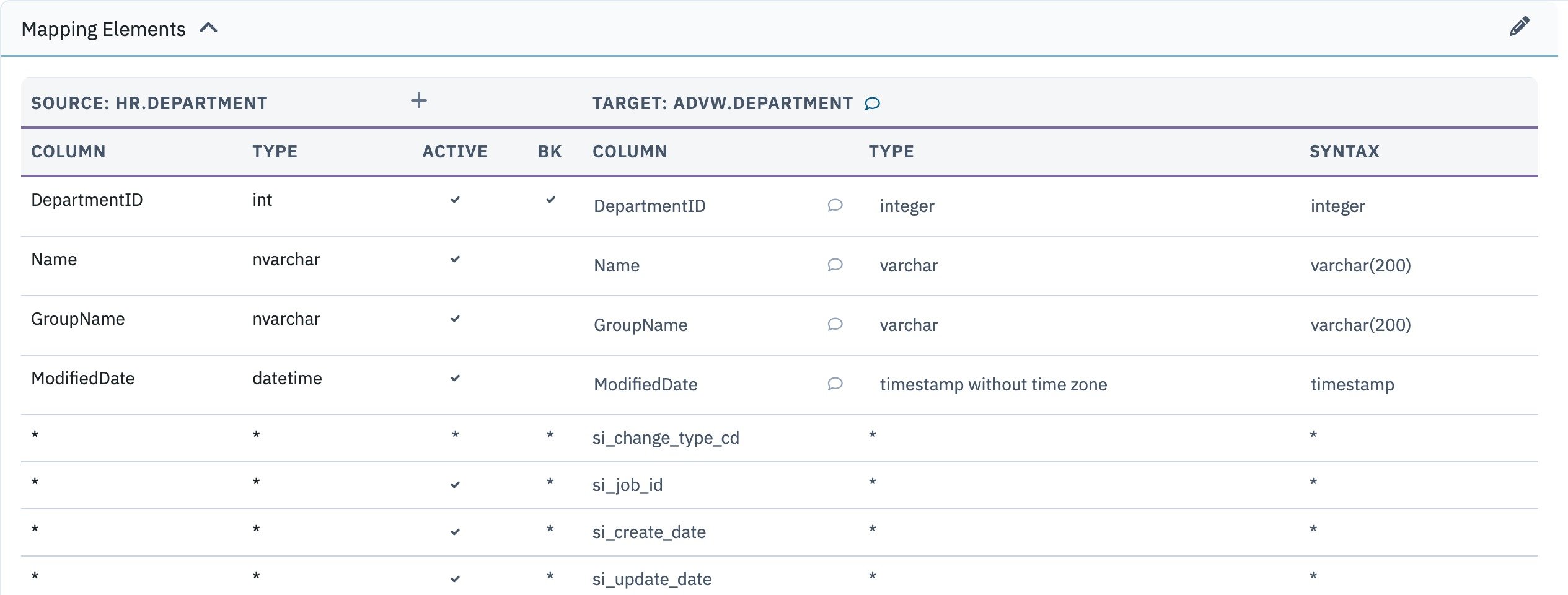
Kodda adds a column namedsi_change_type_cd to the target table. It holds the last change applied to each row, as reported by SQL Server: I = insert, U = update, D = delete.
- Reads the current Change Tracking version from the source (
CHANGE_TRACKING_CURRENT_VERSION()). - On the first run, reads the whole table and loads every row with
si_change_type_cd = 'I'. - On later runs, queries
CHANGETABLE(CHANGES <table>, <last version>)joined to the source table on the Business Key, so only rows changed since the stored version are read. - Merges the changes into the target on the Business Key. Deleted rows stay in the target with
si_change_type_cd = 'D'. - Stores the version read in step 1 as the Next Incremental Value.
4. Removing deleted records (optional)
By default a row deleted in the source is kept in the target and flaggedD. To delete those rows from the target as well, open Target Properties, add the Load property Hard Delete and turn it on.

DELETE FROM <target> WHERE si_change_type_cd = 'D' at the end of each load.
Change Tracking mappings always run with a single extractor; the Number of Extractors setting is ignored.