Activities
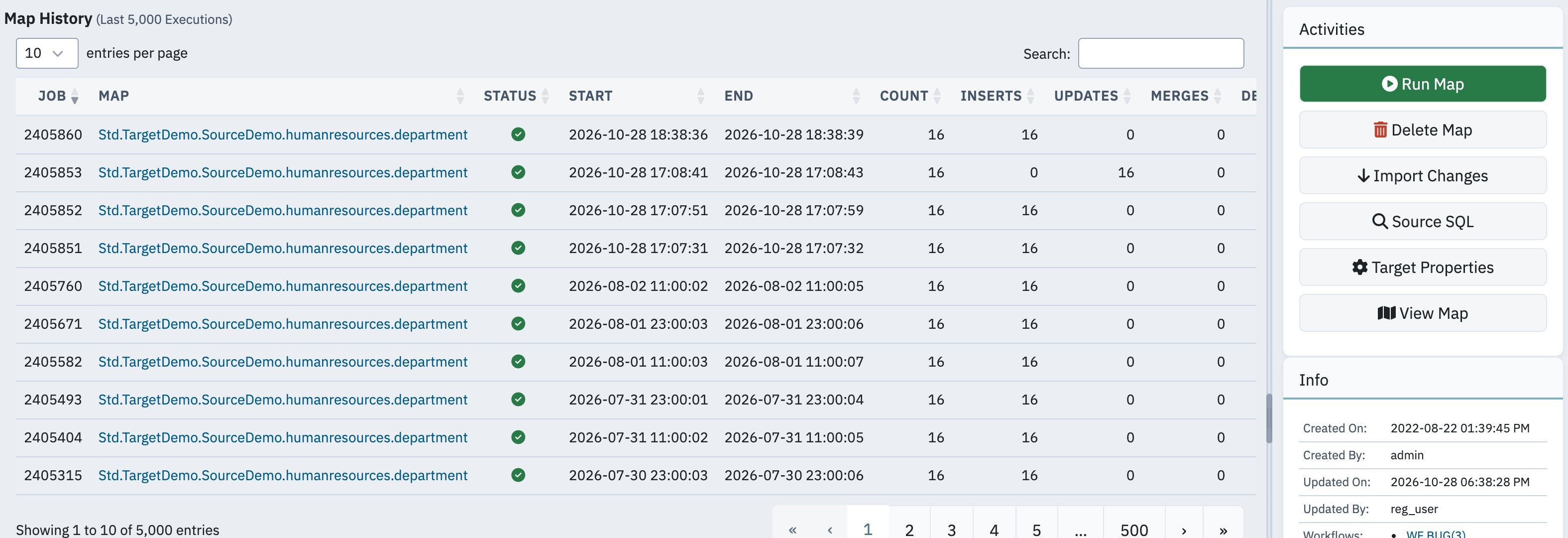
Use the Activities on the right console of the Edit Mapping page to perform a number of activities on your mapping, including: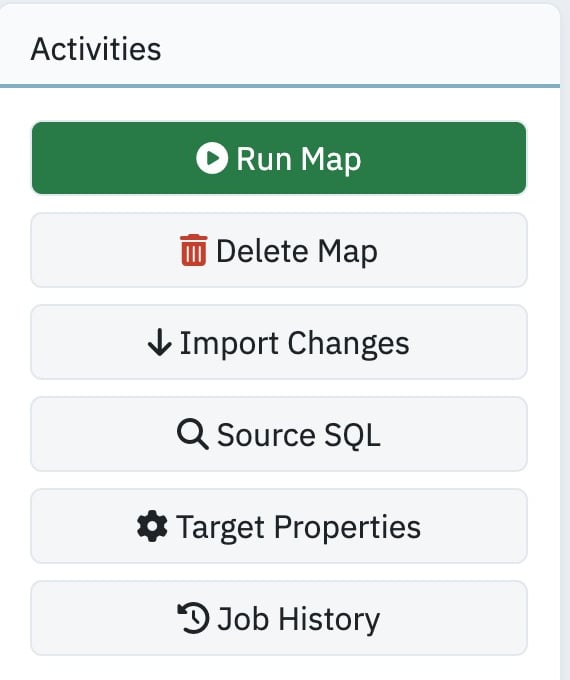
- Run Map executes the map with any changes that you have made and saved to your mapping.
- Delete Map removes the map from your instance.
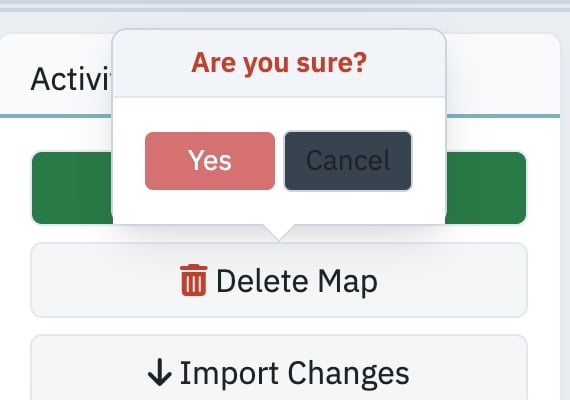
You will be asked if you are sure that you want to delete this mapping before it is removed from the system, as shown in the warning image below.
- Import Changes updates the mapping to include changes in the source data elements.
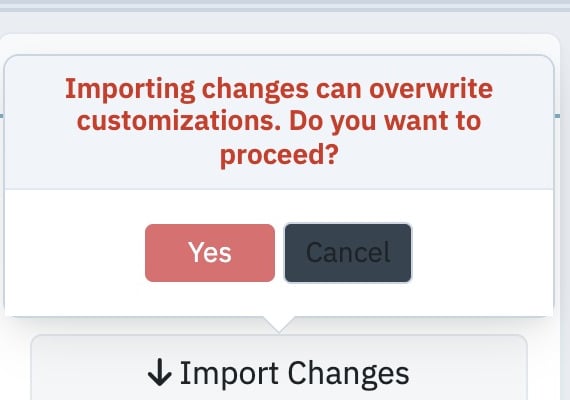
As this may overwrite custom changes that you have made to the mapping, you will be asked if you are sure that you want to import changes before continuing, as shown in the warning image below.
- Source SQL opens the SQL query editor in the center console, described in detail below. Only available for database sources.
- File Preview (file sources only) provides a window for viewing a sample set of data for delimited files.
- Source Filters (Parquet sources only) opens an editor where you enter a filter condition, written like a SQL
WHEREclause, to limit the rows read from the Parquet files. The saved filter is applied every time the mapping runs. See Source Filters below. - Target Properties allows you to add more advanced functionality to your mapping, including adding pre and/or post processing scripts that run existing SQL functions and adding advanced target table properties. See Target Properties below for more details.
- Job History shows the Mapping History of past executions of this mapping in the center console. Click View Map in the Activities panel to return to the mapping.
Source SQL
Users can review the source SQL query that was generated by clicking the Source SQL button. The SQL query editor shows you the query and lets you execute it with the Run button, showing the results beneath the SQL statement. Click Save in the Activities panel to keep changes to the query, or Cancel to discard them.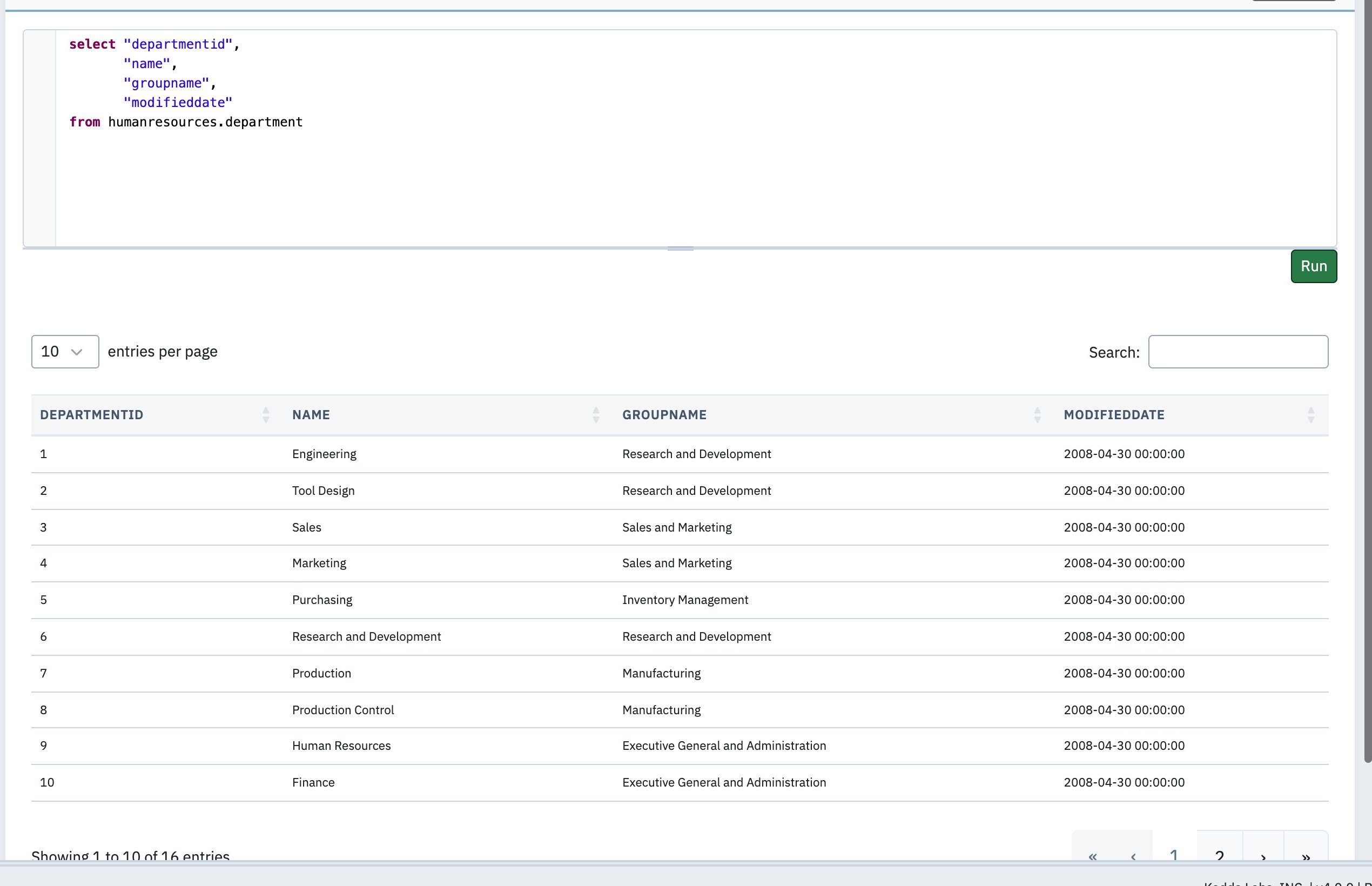
Source SQL History
Every change to a mapping’s custom source SQL is recorded. Click the History button in the Source SQL panel header to see each version of the query, who changed it, and when.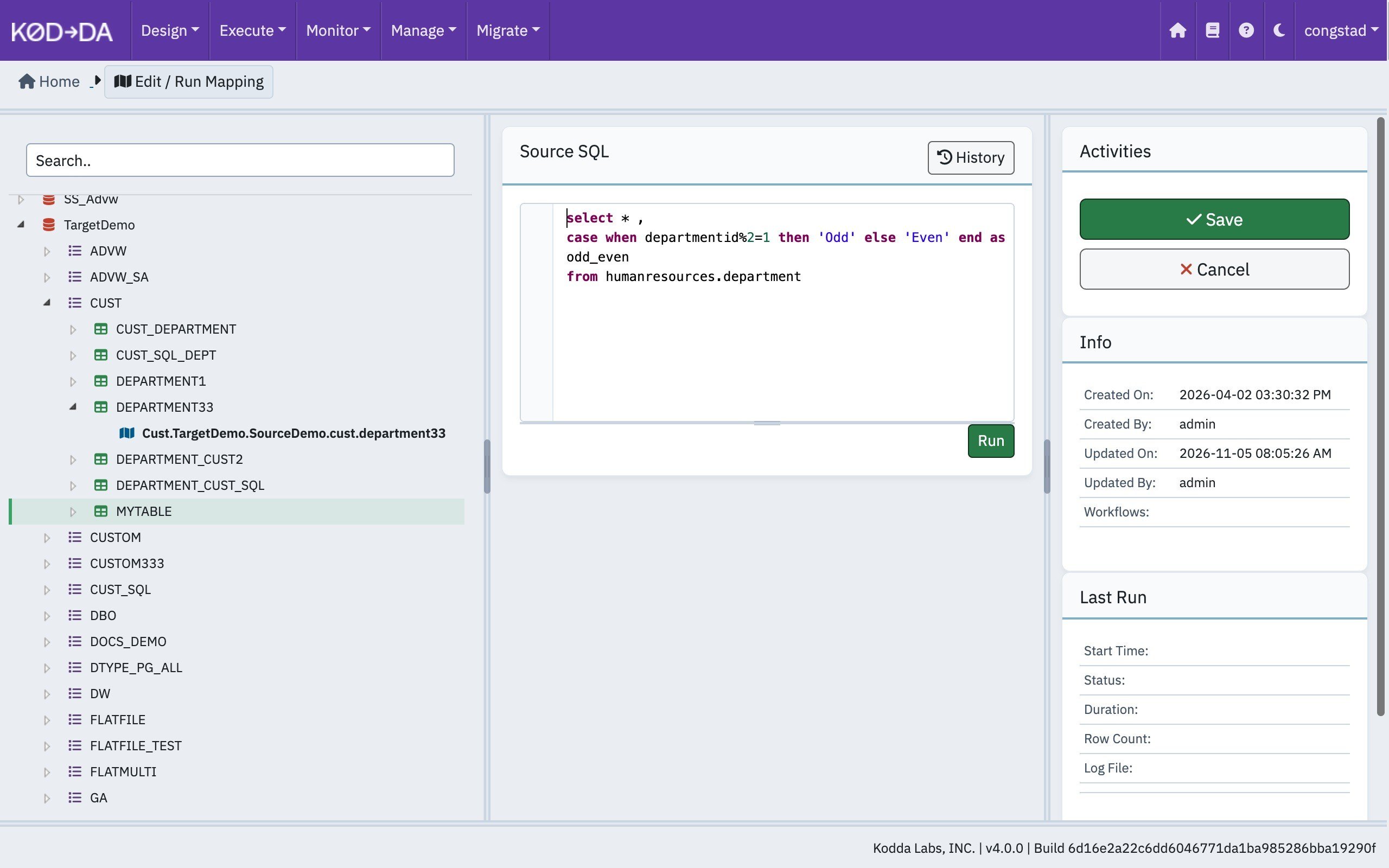
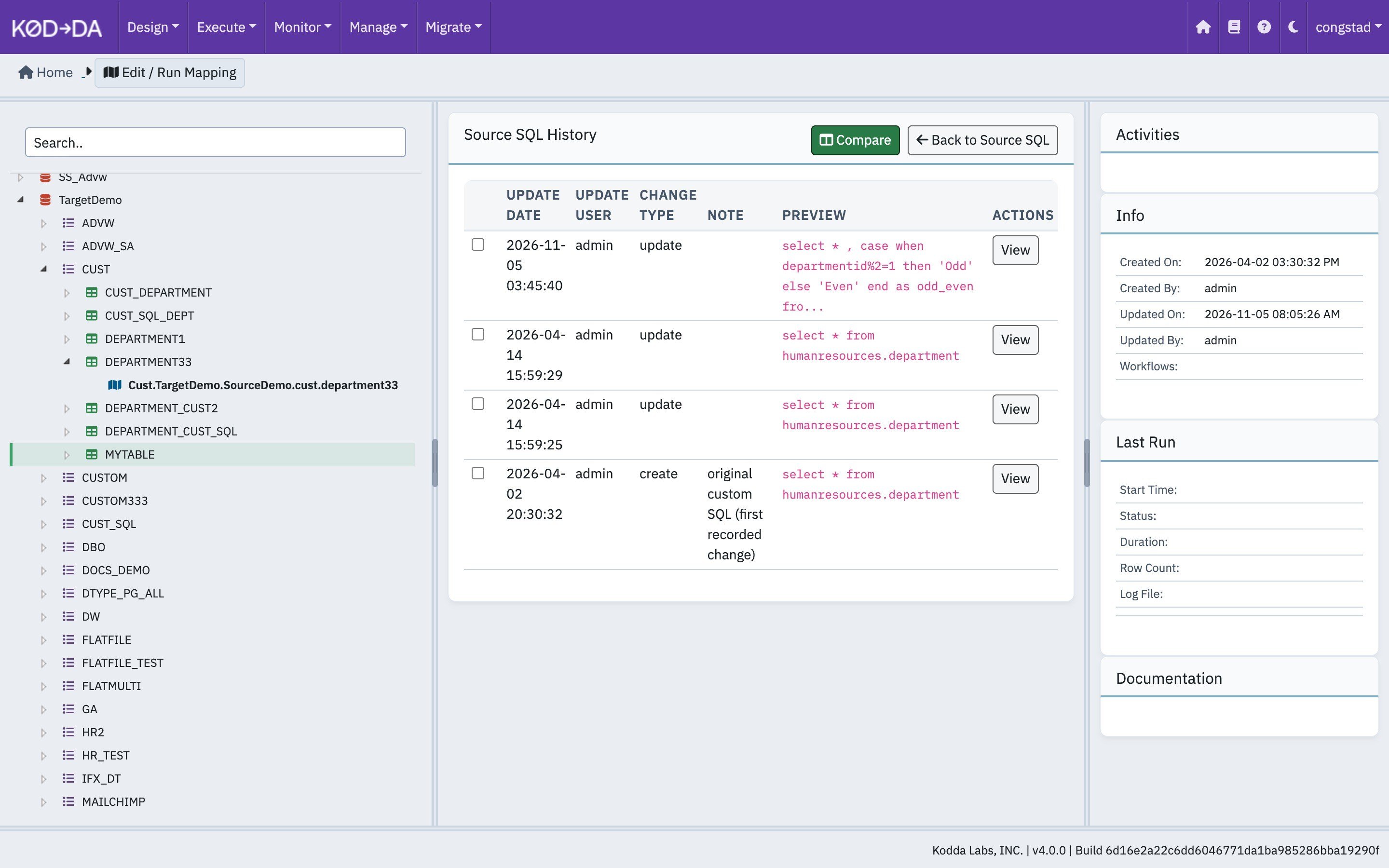
- create — the first custom SQL saved for the mapping.
- update — a later edit saved from the Source SQL editor.
- base_generated — the SQL Kodda generated automatically before the first custom override. Recorded so you can always get back to the original.
- base_rebuild — custom SQL was cleared because the mapping was regenerated.
- delete — the custom SQL was removed.
View a version
Click View on a row to open that version in full, with its date, user, and change type.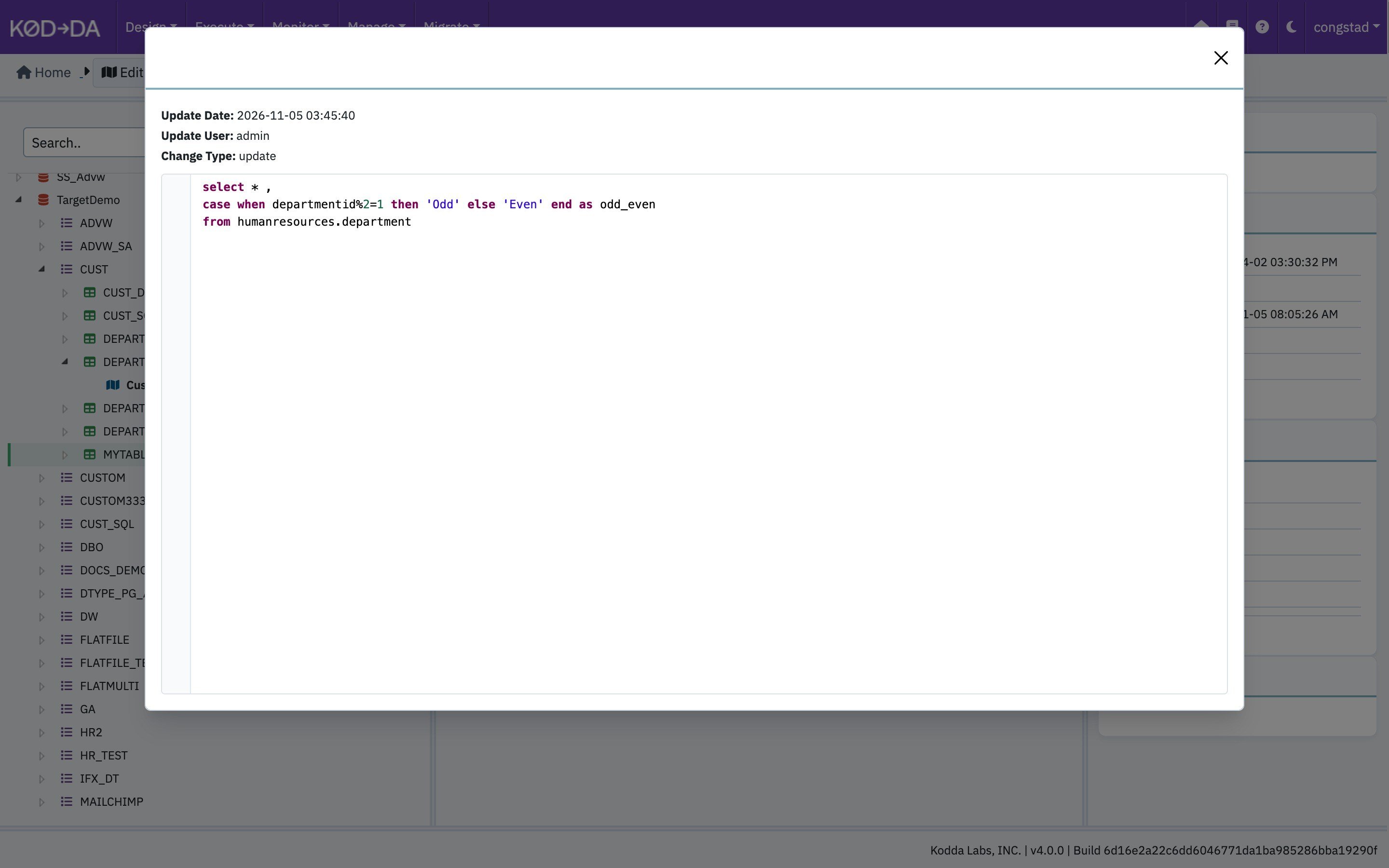
Compare two versions
Tick the checkbox on any two rows and click Compare (the button appears once two rows are selected). The two versions open side by side, oldest on the left, with differences highlighted.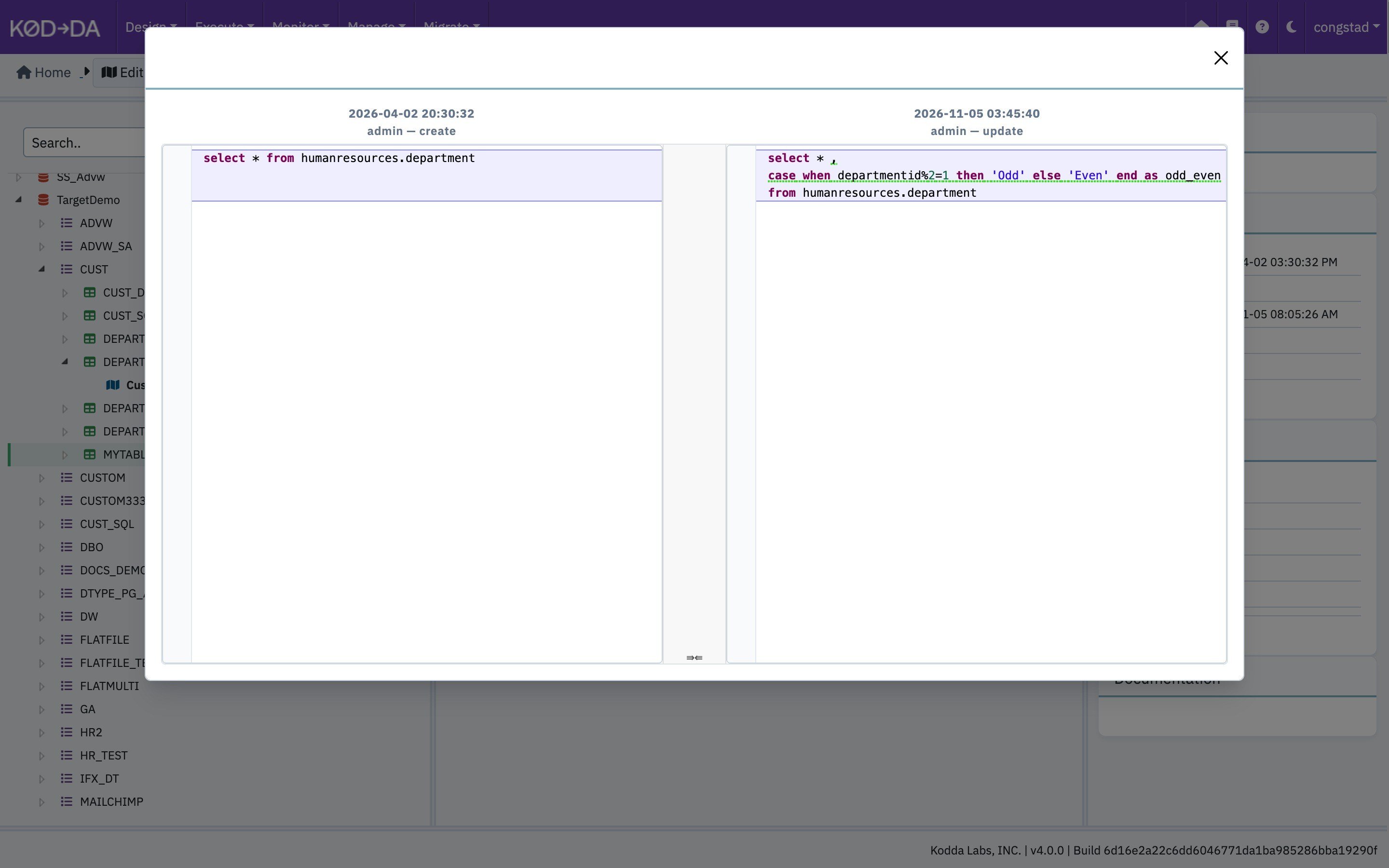
History is read-only. To return to an earlier version, open it with View, copy the SQL, paste it into the Source SQL editor, and Save. That save is recorded as a new update entry, so the full trail is preserved.
GET /api/v1/map/<map_id>/cust_sql_history, which returns the same entries as JSON.
Source Filters
For Parquet sources, click Source Filters in the Activities panel to enter a filter condition. Kodda applies the condition while it reads the Parquet files, so only the matching rows are extracted. If the mapping is incremental, the incremental filter is applied as well.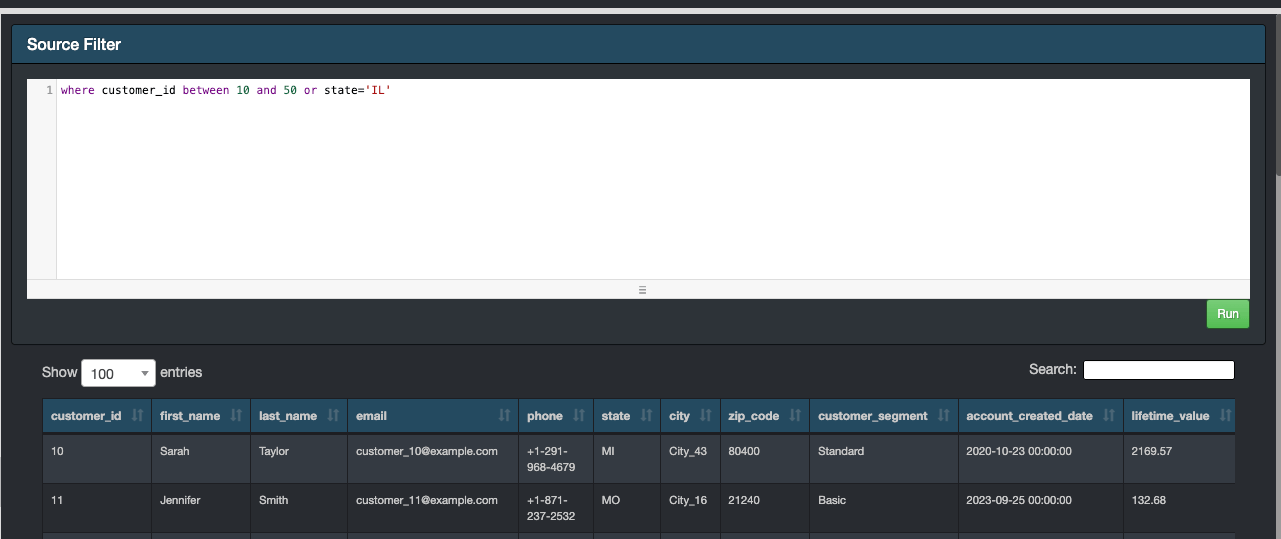
WHERE clause; the word WHERE at the start is optional. For example:
- The left side of each comparison must be a plain column name (letters, numbers and underscores). Functions, calculations and quoted column names are not supported.
- Put text values in quotes. A quoted value in the form
'YYYY-MM-DD'is treated as a date, and'YYYY-MM-DD HH:MM:SS'as a timestamp. - Unquoted numbers,
true,falseandnullare treated as those values.
Target Properties
Click Target Properties in the Activities panel to open the target settings in the center console. There are two tabs. Click Save in the Activities panel to keep your changes or Cancel to discard them.Target Table Properties
Properties are specific settings available for your target system, grouped by Property Type (for example DDL or Load). Choose a Property Type, then a Property Name, and click + to add it; it then appears in the list below where you can set its value. Each property that is available for a target system is listed in the tables at the end of this page.
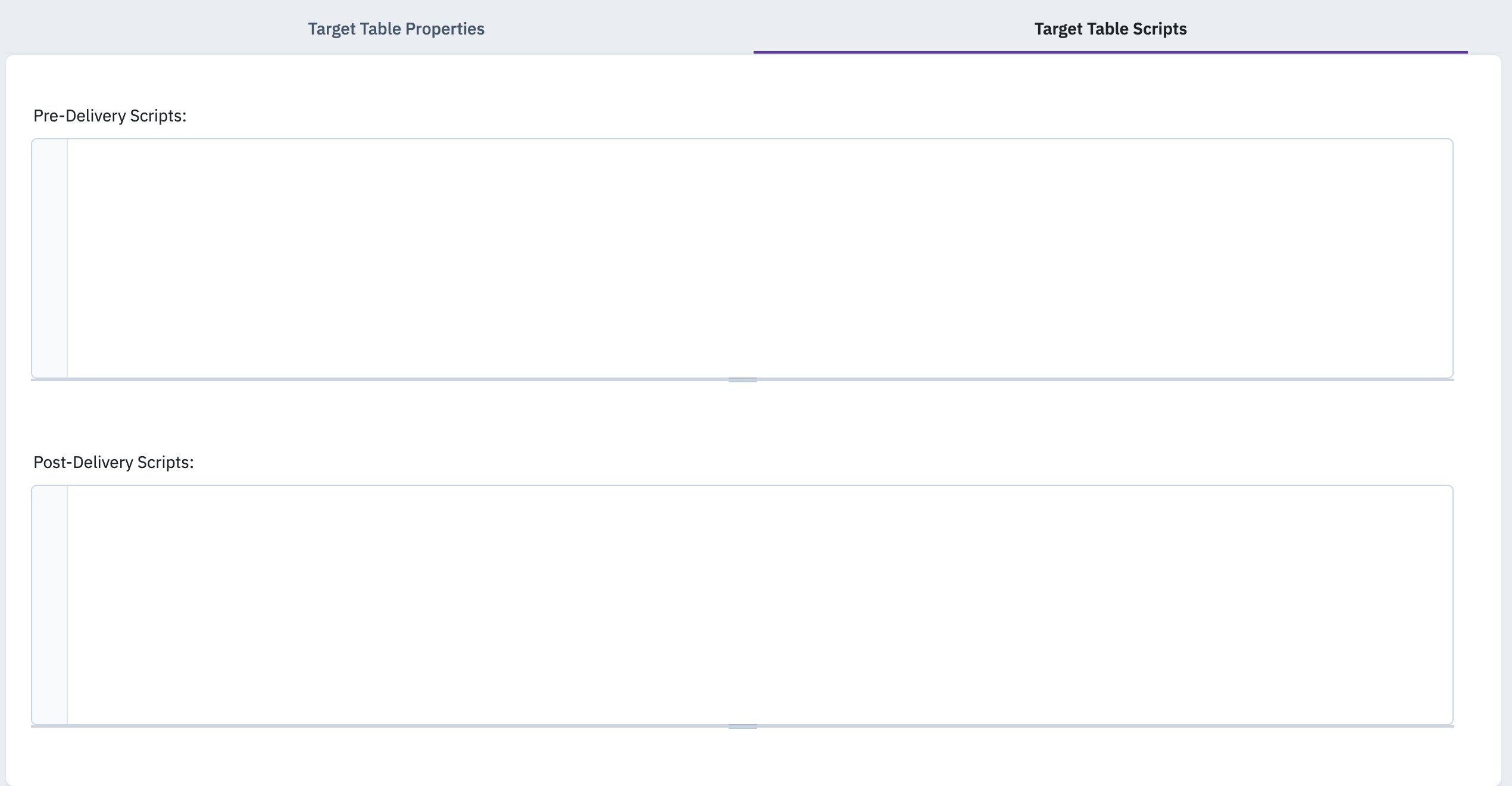
Target Table Scripts
Pre-Delivery Scripts is used to enter SQL statements or scripts that will run on your target before data is delivered to the target table. Post-Delivery Scripts run after delivery. These must use syntax native to your target.